
A zero behind it.
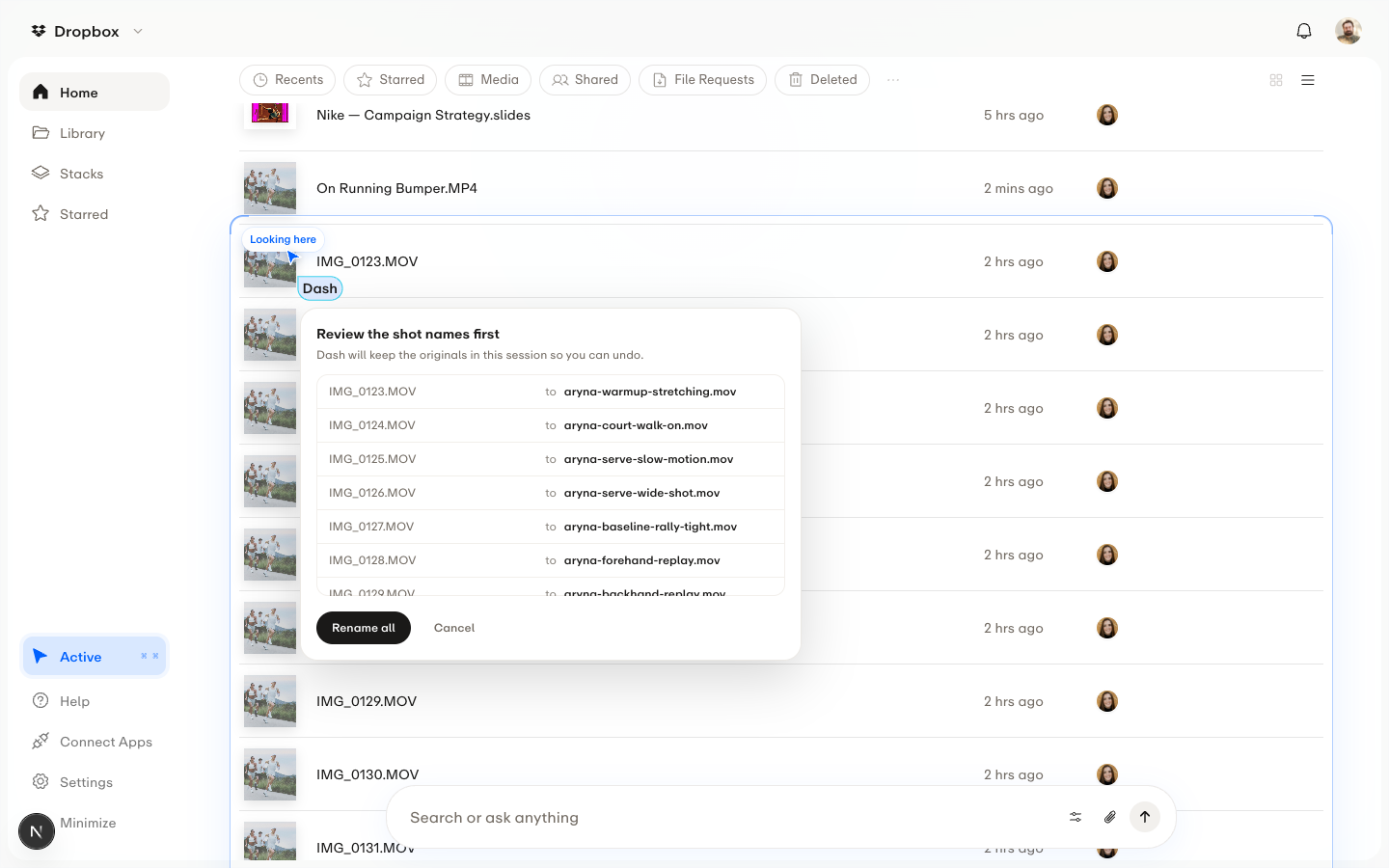
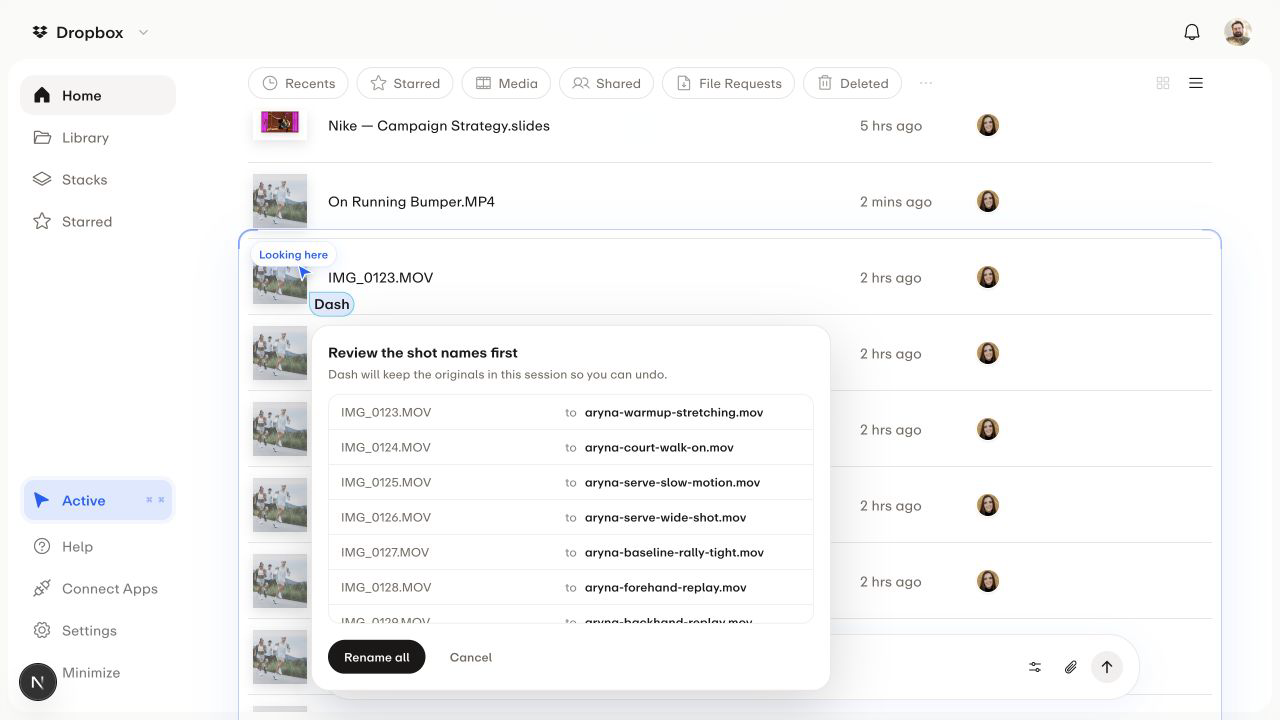
Demonstrate value before asking for work: the system observes and proposes, then the human approves.
IMPACT
Multiple coded directions and two rapid research rounds converged on a trust model: show value, ask permission, keep every change inspectable.
Situation
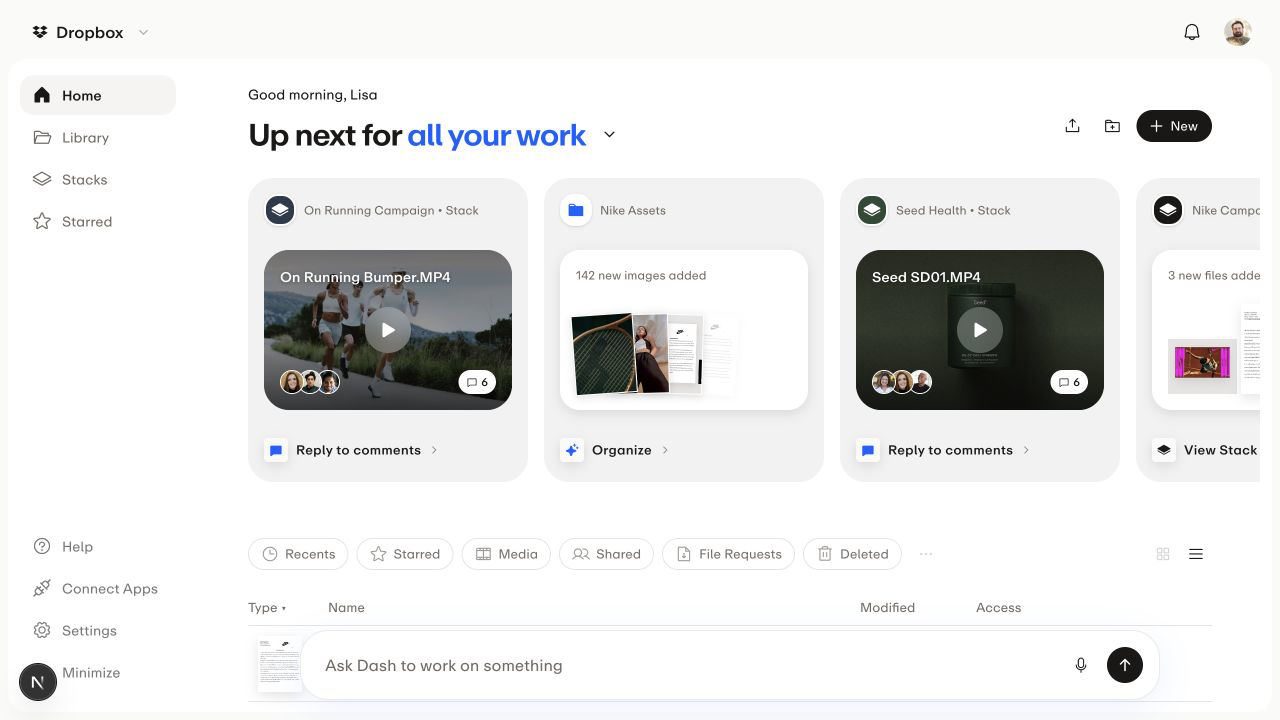
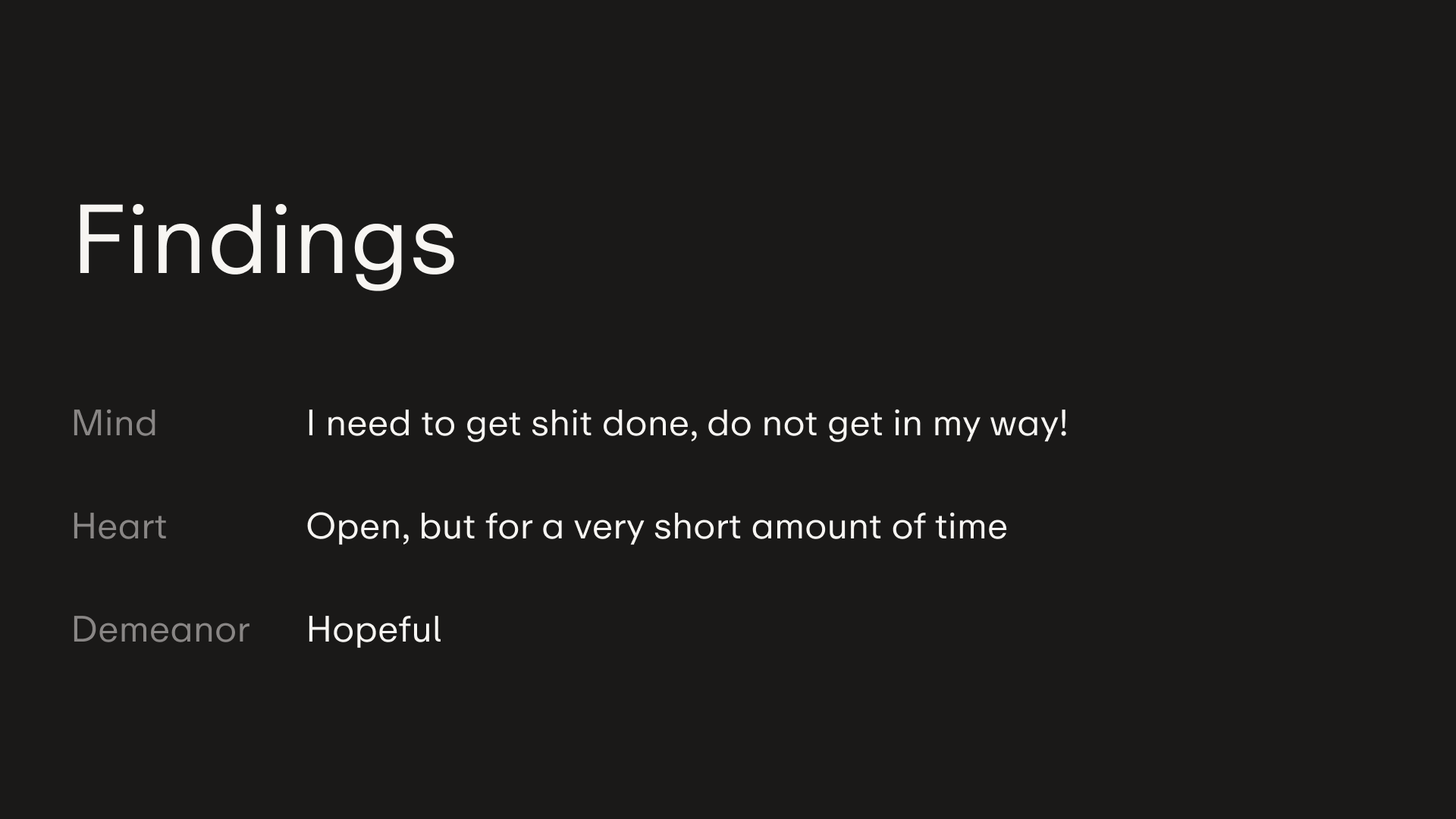
The brief asked why software onboarding could not feel like the first minutes of a great game: learning by doing, not reading a tour. The real constraint was tempo. People arrived to get work done and were open to help only briefly, so a capable product had to prove value without blocking the work.
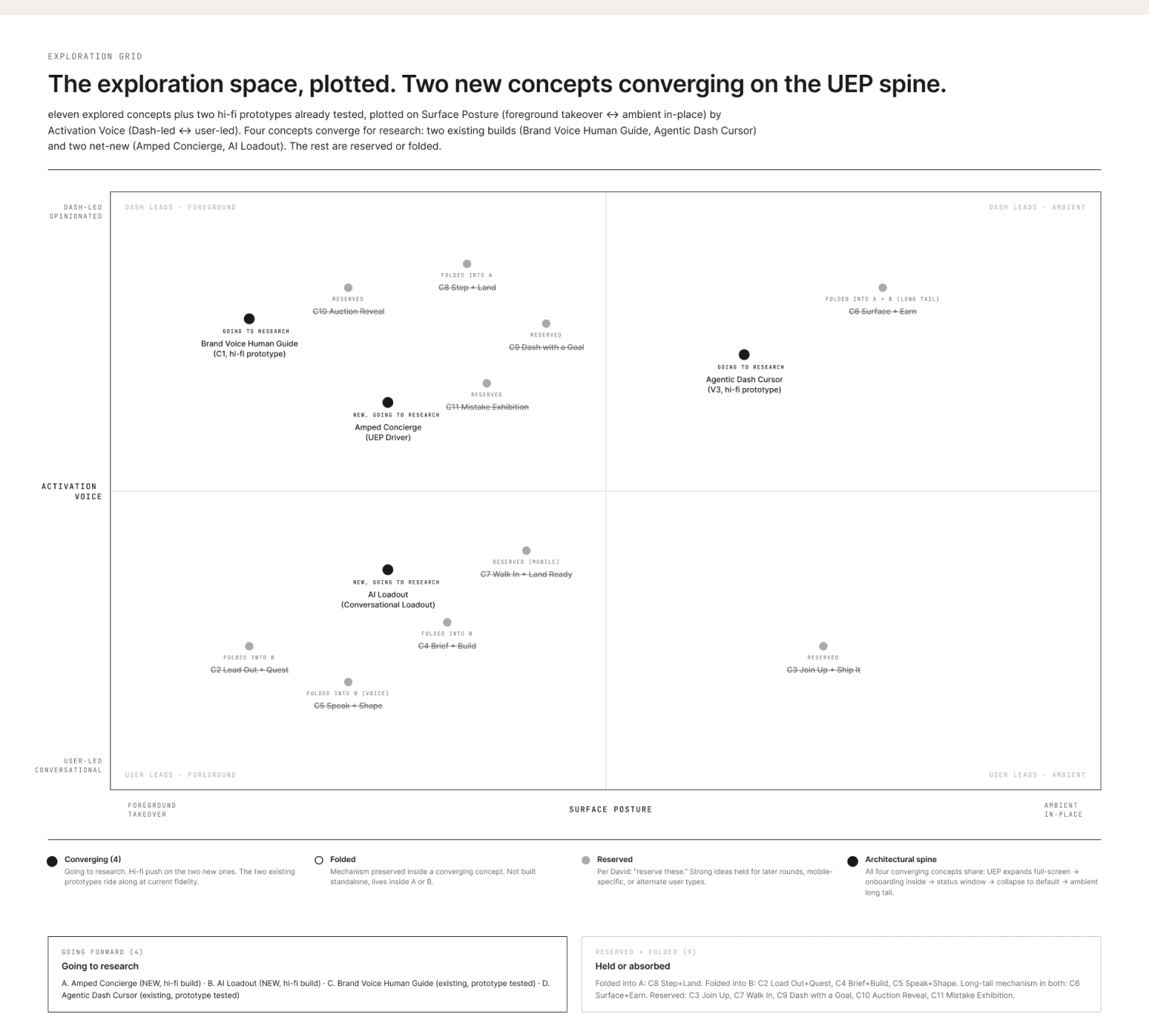
I turned that tension into four different theories of activation: a cinematic foreground takeover, a smart cursor working inside the product, a conversational experience shaped by intent, and template-driven first success. These were not visual skins. They tested whether belief came from attention, demonstration, conversation, or a seeded win.
Making
Round 1 included six participants. The clearest signal was not that one concept won. People wanted AI to do or find something useful before asking for more work, and risky actions needed approval, reversibility, and a visible trail.
The foreground takeover exposed the wrong tempo: it was slow and obstructive. The part worth keeping was smaller—the self-paced, bite-size tutorial behavior that could teach one moment, tuck away, and resume later.
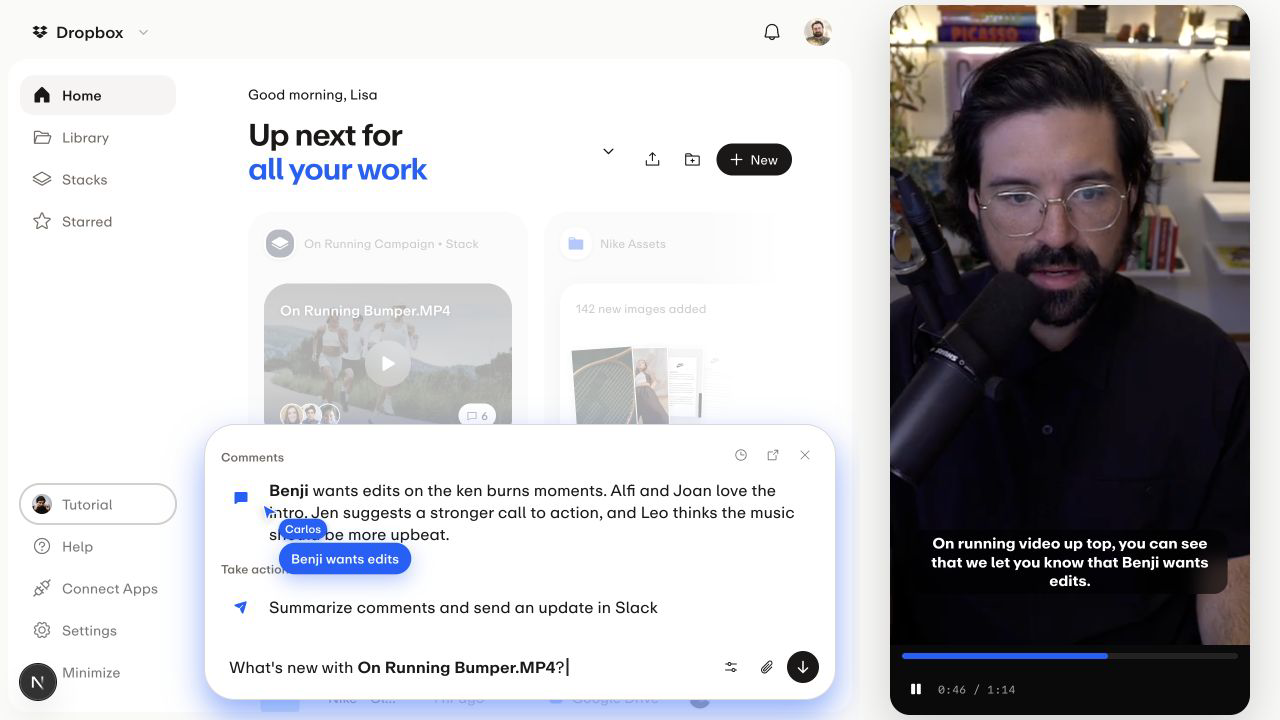
The smart cursor produced the stronger unique signal because it demonstrated capability in the real product, then made its active or parked state visible.
The prototype changed between sessions. A Round 1 synthesis in the morning became five coded changes before the next research session: fewer connector prompts, clearer object visibility, explicit active and parked controls, visible controls instead of memorized shortcuts, and copy centered on useful work. The operating model was session → code → session, often inside one day.
Outcome
The exploration expanded to eleven concepts, then converged to four directions on one architectural spine: enter the real product, let one surface take focus temporarily, show a bounded success, collapse back to the default state, and let contextual assistance handle the long tail.
The observational rename flow became the convergence proof. Dash waits for a person to rename one clip, recognizes the pattern, proposes extending it, opens review, and changes nothing until approval. The opening loop shows that payoff; it is the end of the decision history, not the whole case.
Reflection
Across two rapid research rounds, I built multiple coded onboarding directions and changed the prototype between sessions. The work moved the team away from foreground takeover toward bite-size learning and an ambient trust model: show useful work, ask before acting, and leave a visible trail.
The senior-principal artifact was not a favorite mock. It was the decision system connecting research synthesis, coded hypotheses, between-session iteration, product architecture, stakeholder convergence, and an engineering-ready trust model.
The footage on this page comes from working prototypes with fixture data. It demonstrates interaction and decision logic, not a production service or achieved activation lift.